


More and more people are struggling with carrying too much weight. But when does being overweight become a disease? And is obesity really a distinct medical condition or just a lifestyle problem? The answer is clear: obesity is a chronic disease that can significantly impact your life. In this article, you will learn what exactly lies behind this term, how obesity and being overweight differ, what health risks exist, and what you can do to lead a healthier and lighter life.
Obesity as a disease: What does that mean?
Obesity is not just harmless excess weight. The medical term for this is adiposity, and it describes a pathological increase in body fat associated with serious health risks.
What exactly is obesity?
Obesity is measured using the Body Mass Index (BMI). An adiposity diagnosis is made starting at a BMI of 30. But even more important than the number on the scale is the proportion and distribution of body fat—visceral fat in the abdominal cavity, in particular, is considered especially harmful to health.
Why is obesity considered a disease?
The World Health Organization (WHO) has classified obesity as a disease for years, rather than just a cosmetic flaw or a sign of a lack of discipline. This is because obesity arises from a complex interaction of genetics, environment, metabolism, and psychological factors. It therefore requires medical treatment, just like any other chronic condition.
Symptoms and comorbidities
The most common consequences include high blood pressure, type 2 diabetes, fatty liver, joint problems, and depression. The risk of heart attack, stroke, and certain types of cancer also increases significantly.
Adiposity as a disease: How can it be identified?
Adiposity is not just a matter of weight; it can have physical, mental, and social consequences and is therefore viewed as a systemic disease.
Diagnostic criteria: More than just the BMI
Today, the diagnosis of obesity is based on far more than just calculating the Body Mass Index (BMI). While this serves as an initial indicator, doctors now rely on a holistic diagnostic model to determine the severity of the disease, its causes, and potential secondary issues.
BMI: The starting point, but not the whole truth
The Body Mass Index is calculated using the following formula:
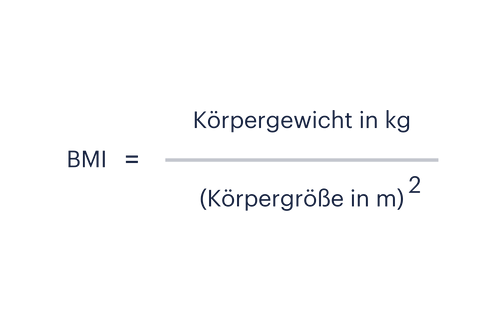

If you would like to know your BMI, please enter your weight and height here:
Waist circumference
Waist circumference is considered particularly informative when it comes to health risks posed by visceral fat (belly fat), independent of the BMI.
Risk thresholds according to the WHO:
- Women: > 88 cm → increased risk
- Men: > 102 cm → increased risk
Waist-to-hip ratio (WHR)
Even more precise: the waist-to-hip ratio.
You can determine your individual body fat distribution using the waist-to-hip ratio.
Generally, there are two forms of fat distribution:
1. The abdominal, central, android form (so-called "apple shape"), which is primarily found in men and is characterized by fat accumulation in the abdominal area (beer belly).
2. The gluteal-femoral, hip-centered, peripheral, gynoid form (so-called "pear shape"), which primarily occurs in women and is characterized by an increase in fatty tissue in the buttocks, hip, and thigh areas.
With the pear type, the hip circumference is greater than the waist circumference; with the apple type, it is the exact opposite.
Waist circumference (in cm) divided by hip circumference (in cm)
- Women: WHR > 0.85 → increased risk
- Men: WHR > 1.0 → increased risk
These values provide clues regarding the body fat distribution pattern, especially the dangerous "apple type" fat in the abdominal cavity, which is associated with diabetes, cardiovascular diseases, and liver problems.
According to the CDC (Centers for Disease Control and Prevention), women should aim for a value below 0.8 and men for a value below 0.9.
Metabolic values and laboratory parameters
In addition to these mentioned anthropometric measurements, blood values play a decisive role:
- Fasting blood glucose & HbA1c: Indication of prediabetes or type 2 diabetes
- Insulin resistance (HOMA index): Early warning sign for metabolic disorders
- Blood lipids (cholesterol, triglycerides): Elevated values indicate lipid metabolism disorders
- Liver values (GPT, GGT): Clues regarding a potential fatty liver
- CRP (C-reactive protein): Inflammation marker, elevated in the case of chronic inflammation due to excess weight
These parameters help to better assess individual health risks and initiate targeted therapy.
Body composition (e.g., BIA or DEXA)
The BMI does not distinguish between fat mass and muscle mass. Therefore, body composition is ideally also analyzed, for example, through:
- BIA (bioelectrical impedance analysis): A simple procedure to determine body fat percentage, muscle mass, and water percentage
- DEXA scan (dual-energy X-ray absorptiometry): Particularly precise; also used to diagnose osteoporosis
In this way, even "slim" people with a high body fat percentage ("normal weight obesity") can be identified.
Psychosocial and psychological factors
Obesity is not just a physical disease; psychological and social aspects also play a role:
- Eating behavior (e.g., emotional eating, binge eating)
- Depression and anxiety disorders
- Childhood experiences, trauma, stress management
- Living conditions, socioeconomic status, physical inactivity
A psychological assessment or behavioral therapy is therefore often an important part of the diagnosis.
Individual risk profiles and secondary diseases
When diagnosing adiposity, doctors also consider:
- Family history (e.g., diabetes, heart attack)
- Existing comorbidities
- Medication intake (e.g., cortisone, antidepressants)
- Sleep habits (e.g., sleep apnea)
- Hormonal factors (e.g., thyroid function, PCOS)
This individual assessment often determines whether health insurance will cover therapies such as medication or stomach reduction surgery, and how urgently treatment must be initiated.
Obesity as a disease: Why it must not be underestimated
The disease of obesity often develops gradually, but its effects on body and mind are serious. Those who do not take the disease seriously risk secondary conditions that can severely restrict their lives.
Physical risks
Obesity affects almost every organ system: cardiovascular, lungs, liver, hormonal system, and musculoskeletal system. Fertility can also suffer, as can the immune system.
Psychological burden and stigmatization
Many affected individuals struggle not only with physical symptoms but also with shame, rejection, and self-doubt. This emotional burden makes the path out of the disease even more difficult, yet support is crucial during this time.
From being overweight to obesity and why the distinction is important
Even though being overweight and obesity are often mentioned in the same breath, the medical distinction is decisive, especially when it comes to assessing risks and choosing the right therapy.
Being overweight means that body weight is above the normal range, but not necessarily pathological yet. Many overweight people feel physically healthy and have no abnormal lab values or complaints. But that can change.
Obesity, on the other hand, is a recognized chronic disease defined not only by a higher BMI but also by the associated health complications, such as disturbed sugar metabolism, high blood pressure, or joint pain. The transition between being overweight and obesity is often fluid and frequently remains unnoticed for too long.
Why is this relevant?
Because early changes in the body often cause no noticeable symptoms but are already paving the way toward obesity. Particularly dangerous is the visceral fat in the abdominal cavity, which is not only visible from the outside but can silently trigger inflammation and metabolic disorders inside the body.
That is why it is so important not just to look at the scale but to evaluate weight in the context of blood values, body fat distribution, and comorbidities. This way, critical developments can be recognized early and countered in a targeted manner.
Weight-related diseases: What can arise from it?
Even if being overweight is by definition not yet a disease, it can be the first step toward obesity and thus a decisive risk factor for numerous illnesses.
Typical secondary diseases associated with being overweight
Starting at a BMI of 25, blood sugar, cholesterol levels, and blood pressure can deteriorate. The risk of diabetes, cardiovascular diseases, joint pain, and certain types of cancer already increases in the overweight range.
When does being overweight become dangerous?
It becomes dangerous when excess weight persists, increases, or is accompanied by other risk factors such as lack of physical activity, stress, or a poor diet. Then, the likelihood that it will develop into a disease requiring treatment increases.
Obesity or being overweight: Where is the boundary?
The terms obesity and being overweight are often used synonymously, but there are clear medical differences. Both describe having excess body weight, but with different implications.
The difference in Body Mass Index
- Overweight: BMI 25 - 29.9
- Obesity: BMI 30 and up
- Obesity Grade II: BMI 35 and up
- Obesity Grade III: BMI 40 and up
As BMI increases, the risk of secondary diseases also increases exponentially.
Why the terms should not be confused
Being overweight is a warning sign; obesity is a disease. This distinction is important for medical care, the reimbursement of therapy costs, and also for societal perception.
Obesity and being overweight: Two sides of the same coin?
Obesity and being overweight are closely linked, but they differ in their medical assessment and therapy. Those who act early can prevent the transition to the disease.
How being overweight can lead to obesity
When more calories are consumed than burned over a long period, body fat increases. Hormonal changes, medications, or lack of sleep can also play a role.
Prevention: What you can do
Exercise, a balanced diet, stress management, and sufficient sleep. These factors help to stabilize or reduce excess weight before it turns into obesity. Medical advice can also be useful.
Being overweight and obesity: Why differentiation is important
The terms "overweight" and "obesity" are often equated, but this can have fatal consequences. Because those who do not recognize obesity as a disease miss the chance for targeted, professional treatment.
Societal impact
Many affected individuals do not receive medical help because their complaints are not taken seriously. This leads to frustration, isolation, and, in the worst case, a worsening of their health condition.
Political and health relevance
In Germany, over 50% of adults are considered overweight—about a quarter are obese. Obesity places a heavy burden on the healthcare system and should also be treated as a serious chronic disease in terms of health policy.
Is being overweight a disease?
The answer is: Not automatically. But being overweight can become a disease, especially if it persists for a long time or worsens.
When does medical intervention make sense?
As soon as secondary symptoms appear or weight continues to rise despite your own efforts, you should seek medical advice. Prevention is better than therapy—especially when it is possible to intervene early.
Why it is not a shame to accept help
Health is not a competition. Getting support—whether through counseling, programs, or medication—is not a sign of weakness, but of taking responsibility for your own body.
Is obesity curable?
Doctors hear this question often, and it is not easy to answer. Obesity is a chronic but treatable condition.
Relapse risk and long-term management
Even after successful weight loss, relapses can occur. This is because the body "remembers" its previous weight. Long-term care, follow-up, and new habits are therefore crucial.
Modern therapies: From behavioral training to weight-loss injections
Today, there are numerous treatment options: nutritional counseling, exercise therapy, behavioral therapy, medications such as GLP-1 analogues (e.g., Wegovy, Mounjaro, Saxenda), or, in severe cases, surgery.
Conclusion: What is the difference between being overweight and obesity?
The distinction is medically important because it determines treatment, cost reimbursement, and risk assessment.
- Overweight = slightly elevated weight (BMI 25 - 29.9)
- Obesity = pathologically elevated weight (BMI 30 and up), often with secondary diseases
While being overweight is often well-treatable through lifestyle changes, obesity often requires multimodal therapy, with support from doctors, psychologists, and nutrition experts.
Obesity is a disease that must be taken seriously—by those affected, by doctors, and by society. It is not about guilt or discipline, but about a health problem with clear medical solutions.
If you are affected or know someone who is: You are not alone. The sooner you seek help, the better you can regain your quality of life and live a healthier life in the long term.
Sources:


