

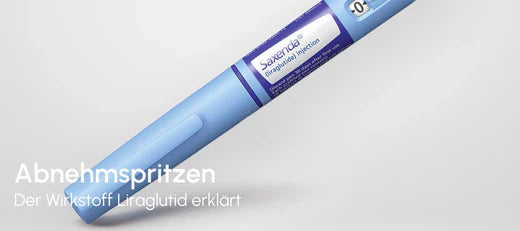
Liraglutide, an innovative active ingredient originally developed to lower blood sugar levels and treat type 2 diabetes, has also proven effective in the treatment of overweight and obesity: Liraglutide reduces appetite, simultaneously increases feelings of fullness, and thus aids in weight loss. The medication Saxenda, approved for the treatment of overweight and obesity, was launched in 2014 and is now also available in Germany.
SoLean explains how Liraglutide works, how much weight you can lose, and what to keep in mind during its use. Furthermore, we clarify how and where you can purchase Liraglutide and what treatment costs.
What is Liraglutide?
Liraglutide is a so-called GLP-1 receptor agonist, which has been approved since 2015 for the treatment of obesity with a BMI ≥ 27 kg/m² with comorbidities or a BMI ≥ 30 kg/m² without comorbidities. Liraglutide mimics the action of the human body's naturally occurring hormone glucagon-like peptide-1 (GLP-1) and, in addition to lowering blood glucose, also has a weight-reducing effect. Medications containing Liraglutide include Saxenda and Victoza, with the former having been used primarily for weight reduction since 2014 and the latter for the treatment of type 2 diabetes. The medication Saxenda is injected subcutaneously (directly under the skin) once daily, regardless of meals, and is sold as a pre-filled pen for home use.
How exactly does Liraglutide work?
The active ingredient Liraglutide imitates the naturally occurring hunger hormone (glucagon-like peptide-1; GLP-1), a physiological regulator of appetite and food intake. The precise mechanism of action of Liraglutide involves several processes that work together to lower blood sugar levels and support weight loss:
1. Increase in insulin secretion
Liraglutide stimulates the beta cells of the pancreas to release more insulin when blood sugar levels are high. Insulin helps transport sugar from the blood into the cells, where it is used for energy. This process helps lower blood sugar levels after meals and prevents them from becoming too high. The hormone insulin, responsible for regulating blood sugar levels, plays an important role not only for patients with diabetes but also for individuals who are overweight or obese. A rapid rise and fall in blood sugar levels during and after meals can lead to an intense craving for food—so-called "cravings." Medications with Liraglutide can influence this process by slowing down gastric emptying, thereby causing food to enter the intestine more slowly. This leads to a gradual rise in blood sugar levels and a controlled release of insulin. Consequently, the likelihood of "binge-eating attacks" is reduced.
2. Reduction of glucagon secretion
At the same time, Liraglutide reduces the release of glucagon, another hormone produced by the alpha cells of the pancreas. Glucagon has the opposite effect of insulin; it increases blood sugar levels by stimulating the liver to release stored glucose. By reducing glucagon release, Liraglutide helps limit the rise in blood sugar levels, leading to a decrease in postprandial ("after eating" or "after a meal") and fasting blood glucose. The blood-sugar-lowering effect is more pronounced in patients with prediabetes and diabetes than in patients with blood sugar levels within the normal range.
3. Slowing of gastric emptying
Liraglutide delays gastric emptying, which means food remains in the stomach for longer. This slowing can lead to earlier and longer-lasting feelings of fullness, which in turn reduces food intake and supports weight loss.
4. Reduction of appetite
Liraglutide binds to and activates the GLP-1 receptor (GLP-1R) in the brain. Through the specific activation of GLP-1R by Liraglutide, there is an increase in key satiety signals and a decrease in key hunger signals, leading to reduced food intake. Simply put: people treated with Liraglutide feel full faster, experience less hunger, and therefore eat less.
5. Improvement of heart health
Studies have also shown that therapy with Liraglutide in people with type 2 diabetes at a dosage of 1.8 mg per day demonstrates a significant reduction in cardiovascular risk. This means that the risks for conditions such as heart attacks or strokes can be lowered. This effect is in addition to the direct impacts on blood sugar and weight.
In summary, Liraglutide works through a combination of mechanisms that influence both blood sugar regulation and body weight, making it an effective tool in the management of type 2 diabetes and obesity. As with any medication-based therapy, it is important to begin and continue the use of Liraglutide under the supervision of a qualified healthcare provider to ensure the best results and minimize side effects.
At SoLean, you can have your suitability for the medication medically assessed by qualified doctors. They evaluate your prescription request thoroughly, using a questionnaire and photo, to avoid interactions with existing treatments and to ensure medical diligence.
How much weight can you lose with Liraglutide?
Weight reduction with Liraglutide varies individually, but the efficacy of Liraglutide for weight management was investigated in four randomized, double-blind, placebo-controlled phase 3 studies (SCALE studies), in which a total of 5,358 patients participated. The studies show that individuals using Liraglutide in combination with a calorie-reduced diet and increased physical activity can lose an average of 5-10 percent of their body weight. For instance, in the registration study, an average weight loss of 8 percent was achieved after 56 weeks of therapy with 3 mg of Liraglutide daily; after 3 months, a weight loss of 5 percent of the original weight is expected. Weight loss under Liraglutide reaches a plateau after about a year, meaning that further weight reduction does not occur despite continuing the therapy. Therefore, it is crucial to view the intake of medication as an opportunity but also as a commitment to optimize long-term nutritional habits and exercise more.
The medication Saxenda should be discontinued after 12 weeks of treatment at a dose of 3.0 mg/day if patients have not lost at least 5% of their original body weight.
Who is treatment with Liraglutide suitable for?
Treatment with Liraglutide is suitable for various groups of patients, with the focus according to EU approval being on individuals suffering from overweight (obesity) or type 2 diabetes. Specific criteria for suitability may vary depending on the medication's approved indications and health authority guidelines. In general, the guidelines include:
- Adults with obesity: Liraglutide is suitable for adults with a body mass index (BMI) of 30 kg/m² or higher (obese), especially if other weight loss methods, such as diet and exercise, have not been successful.
- Adults with overweight and weight-related comorbidities: Adults with a BMI of 27 kg/m² or higher (overweight) and at least one weight-related comorbidity such as type 2 diabetes, high blood pressure, dyslipidemia, or obstructive sleep apnea may also be considered for treatment with Liraglutide.
- Patients with type 2 diabetes: Liraglutide is used to improve blood sugar control in adults with type 2 diabetes, especially when they cannot be sufficiently controlled with diet and exercise alone. It can be used alone or in combination with other diabetes medications, excluding treatments that already contain a GLP-1 receptor agonist.
- Patients who have difficulty losing significant weight through diet and exercise alone.
A prerequisite is also the willingness to combine the medication treatment with lifestyle changes (including dietary changes, calorie reduction, at least 150 minutes of exercise/week) to achieve long-term results.
Since the use of Liraglutide for weight loss or diabetes entails various risks, treatment with Liraglutide should always occur under the supervision of a qualified healthcare provider who has experience in treating obesity or type 2 diabetes. This allows an assessment of whether Liraglutide represents a suitable therapy.
At SoLean, you receive a holistic weight loss service. This includes an individual treatment recommendation from a qualified doctor based on your personal health condition. After verifying medical suitability, a prescription for the appropriate medication is issued. 100% online, convenient, and discreet from home, with delivery of the medication. For follow-up orders, treatment success and any side effects that may have occurred are taken into account, and the dose may be re-evaluated if necessary.
What side effects are to be expected when taking Liraglutide?
The side effects for the medication Saxenda, with the active ingredient Liraglutide, were investigated in a clinical development program. It consists of 6 completed clinical studies in which 5,813 obese or overweight patients participated, all of whom had at least one weight-related comorbidity. Overall, the side effects most frequently reported during treatment with Saxenda were gastrointestinal, i.e., affecting the digestive tract:
Very common (in more than 1 in 10 users) were gastrointestinal side effects, such as nausea, vomiting, diarrhea, or constipation. Furthermore, about 1 in 10 treated people reported, among others:
- Indigestion, heartburn, feeling full, or flatulence
- Weakness, fatigue, and dizziness
- Low blood sugar (hypoglycemia)
- Altered taste sensations
- Sleep disorders
- Skin reactions at the injection site
Other unwanted side effects that may occasionally occur (in about 1 in 100 people treated) include, for example, fluid loss (dehydration), delayed gastric emptying, allergic reactions such as skin rashes (e.g., at the injection site), or an increased pulse. Prevent dehydration by drinking enough during use (at least 2 liters per day).
Serious side effects such as acute pancreatitis (inflammation of the pancreas) occur very rarely—in the SCALE study program, in 0.3 percent of patients on Liraglutide and 0.1 percent on placebo. Early signs of this include severe and persistent pain in the upper abdomen that may radiate to the back, as well as nausea and vomiting. If these symptoms occur, do not continue to use the Liraglutide injections and contact a doctor immediately.
For a complete list of potential side effects, please consult the package insert of the respective Liraglutide medication.
In summary, due to the regulatory effect on digestive processes in the body, primarily gastrointestinal side effects occur, such as nausea and abdominal discomfort, which usually only occur at the beginning of therapy. Therefore, a gradual adjustment of the dose in 4-week intervals is necessary.
At SoLean, in addition to the package insert, patients receive detailed information about side effects in an information letter from our qualified team of doctors as part of their professional medical support. For follow-up prescriptions with stated side effects, the prescribing doctor evaluates the severity of the side effects via a digital re-anamnesis and decides individually regarding a prescription or dose adjustment.
What interactions can occur during treatment with Liraglutide?
Various medications have the potential to trigger interactions or be impaired in their effect when used concurrently with Liraglutide. Therefore, always inform your doctor about all prescription and over-the-counter medications that you use during, after, or before treatment with Liraglutide. When ordering from SoLean, this is also inquired about in the digital questionnaire.
Important note for diabetes patients: Since the active ingredient Liraglutide stimulates the body's own insulin production, the simultaneous use of diabetes medications can lead to interactions. Especially for patients with type 2 diabetes treated with insulin or medications containing the active ingredient sulfonylurea, Liraglutide can trigger low blood sugar (hypoglycemia). To coordinate the necessary medications, the doctor must therefore usually adjust the dose of the medications and perform regular checks of blood sugar levels.
The simultaneous intake of warfarin or other coumarin derivatives or blood-thinning medications must also be clarified with a medical professional before using Liraglutide. To avoid interactions or side effects, regular blood tests to determine coagulation capability may be necessary in this case.
Treatment with Liraglutide should always occur under the supervision of a qualified healthcare provider who has experience in treating obesity or type 2 diabetes. It is important that patients follow all recommendations regarding diet, exercise, and lifestyle changes to achieve the best results.
If you take other medications as well, you should be mindful of the timing of intake: the effect generally remains, but it may be delayed since the stomach empties more slowly under treatment with Liraglutide.
Depending on the prescribed medication, further side effects may occur, which you can find in the package insert.
Contraindication: When should you not take Liraglutide?
Medications with the active ingredient Liraglutide (such as Saxenda) are not suitable for patients who are allergic to the active ingredient or any other component. Medications with Liraglutide are also not suitable for patients with type 1 diabetes mellitus.
Due to the relative novelty of the active ingredient Liraglutide, special caution is advised when used in certain groups of people, and it should only occur if a doctor has assessed that the medical benefits outweigh the risks. This particularly includes:
- People older than 75 years
- Children under 12 years
- Pregnant and breastfeeding women
People with the following pre-existing conditions:
- severe heart failure
- liver diseases
- kidney problems
- severe gastrointestinal diseases with delayed gastric emptying or intestinal inflammation
- gallstones
- inflammation of the pancreas or gallbladder
- thyroid diseases
As Saxenda and other medications containing liraglutide are prescription drugs, a medical assessment is required in every case before use. Professional medical guidance that is tailored to your individual health situation is available, for example, through the service provided by SoLean on the topic of weight loss.
What is the difference between liraglutide (Saxenda) and the semaglutide medications Wegovy and Ozempic (semaglutide)?
Semaglutide (Wegovy, Ozempic) and liraglutide (Saxenda) share the mechanism of GLP-1 receptor agonism, which contributes to weight reduction. However, they differ in their chemical structure, additional effects or side effects, and the frequency of administration. Semaglutide has a longer duration of action, meaning it needs to be administered less frequently (once weekly) compared to liraglutide, which is injected daily.
The choice of medication depends on individual factors, preferences, and medical recommendations. Which medication is suitable for your individual health condition and your life situation should be assessed by a qualified physician.
A direct comparison: semaglutide vs. liraglutide vs. tirzepatide
Liraglutide (Saxenda), semaglutide (Wegovy and Ozempic), and tirzepatide (Mounjaro) all belong to the group of effective GLP-1 medications used for weight reduction in adults who are overweight or obese, often in combination with a calorie-reduced diet and increased physical activity. Although all three medications are effective in the treatment of overweight and obesity, these active ingredients exhibit specific differences:
GLP-1 receptor agonism: Semaglutide and liraglutide mimic the effect of the body's own hormone GLP-1 (glucagon-like peptide-1), which increases insulin secretion after meals, reduces glucagon secretion, slows gastric emptying, and increases the feeling of fullness. This leads to reduced food intake and weight loss.
Tirzepatide (Mounjaro) is a dual agonist that stimulates both the GLP-1 receptor and the GIP (glucose-dependent insulinotropic polypeptide) receptor. This dual effect can lead to improved efficacy in reducing body weight by activating the GIP receptor in addition to the GLP-1 effect, which further improves insulin secretion and lowers blood sugar levels more effectively. In clinical studies, tirzepatide may show higher effectiveness in weight loss compared to pure GLP-1 receptor agonists, which is partly due to the additional effect on the GIP receptor.
Tirzepatide, liraglutide, and semaglutide thus all belong to a class of medications known as GLP-1 receptor agonists, with the exception of tirzepatide, which additionally possesses the properties of a GIP receptor agonist.
How and where can I buy medications containing liraglutide?
The medications Saxenda and Victoza containing the active ingredient liraglutide are prescription-only. To purchase these medications in Germany, a prescription is therefore required. Consequently, a physician must be consulted—in an in-person practice or online—who will evaluate your health suitability for treatment with liraglutide.
The prescription can be filled at both local pharmacies and online pharmacies. Local pharmacies offer the advantage that the medication is handed over immediately upon presentation of the prescription—provided it is in stock. Digital services, such as SoLean, offer the option of having the medication conveniently delivered to your home by an online pharmacy, which can be particularly practical.
Can you buy liraglutide without a prescription?
The supply of prescription medications containing liraglutide, such as Saxenda, without a prescription is illegal for both the buyer and the provider. If the medication is offered to you without a prescription, for example on the internet, you should steer clear, as it may be a counterfeit.
What do medications containing liraglutide cost?
The costs for obesity treatment with liraglutide or Saxenda can vary significantly, depending on several factors such as availability and the dosage of the medication, the duration of therapy, and the patient's insurance coverage. As a general guideline for the costs of treatment with Saxenda for obesity without insurance coverage, you can calculate several hundred euros per month.
Does health insurance cover treatment with liraglutide?
To date, statutory health insurance funds generally do not cover the medical treatment of obesity. Private health insurance companies have different regulations that depend on the individual contract conditions. It is advisable to inquire directly with your health insurance provider as to whether treatment with liraglutide is covered.
Conclusion on the active ingredient liraglutide
Liraglutide works by mimicking the natural hormone GLP-1, which plays a key role in regulating blood sugar levels and appetite. By slowing gastric emptying and increasing insulin secretion in response to elevated blood sugar levels, liraglutide helps to reduce appetite, extend the feeling of fullness, and thus decrease food intake. These mechanisms not only support blood sugar control in type 2 diabetes but also promote weight loss in patients who are overweight or obese. The following also applies to liraglutide: without dietary changes, there is no sustainable weight loss success.
The medication is an effective tool, but because the use of liraglutide for weight loss may be associated with risks, the suitability of medications like Saxenda must always be discussed with a physician.