

Overweight and obesity are not just numbers on a scale – they are complex health conditions that affect many people's lives: Being significantly overweight is both a psychological and physical burden.
Overweight and obesity, also known as adiposity, occur when the energy intake from food exceeds the energy the body consumes through activity and basic metabolism, leading to excessive fat accumulation in the body. The reasons for this are manifold and can be genetic, metabolic, hormonal, as well as behaviorally driven.
The modern Western lifestyle often includes a high-calorie diet with too little daily exercise, which is why more and more children and adults in Germany are affected by obesity. The RKI currently estimates that more than half of the adults in this country are overweight, with about 2 out of 5 people being obese. The World Health Organization (WHO) even speaks of a global epidemic – a condition that has far-reaching consequences for the health and well-being of many people.
When am I considered overweight?
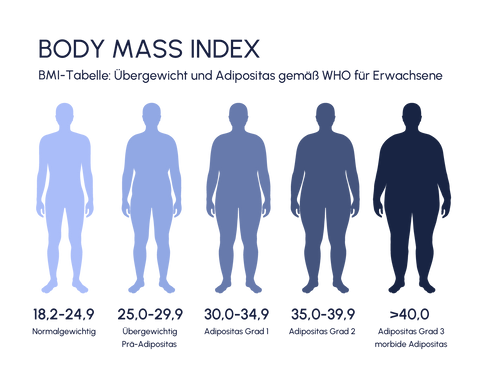
Overweight is defined based on the Body Mass Index (BMI), a measurement for the ratio between weight and height. A BMI of 25 to 29.9 is considered overweight. This classification serves as an indicator of an increased risk for various health problems, although it does not distinguish between muscle and fat mass.
When do I have obesity?
Obesity occurs when the BMI is 30 or higher. This classification signals a significantly increased risk for health problems compared to being a normal weight or merely overweight.
Obesity Class I and risks
Obesity Class I is diagnosed with a BMI of 30 to 34.9. People with Obesity Class I have an increased risk for diseases such as type 2 diabetes, high blood pressure, heart disease, and certain types of cancer.
Obesity Class II and risks
With a BMI of 35 to 39.9, one falls into the category of Obesity Class II, which is associated with an even higher risk for the aforementioned diseases as well as sleep apnea and osteoarthritis.
Obesity Class III and risks
Obesity Class III, also known as morbid obesity, is diagnosed with a BMI of 40 or higher. This condition is associated with an extremely high risk for heart disease, insulin resistance, stroke, severe joint problems, and a reduced life expectancy.
The causes of obesity
What determines whether people become overweight? The causes of obesity are diverse and include genetic factors, lifestyle choices such as excessive calorie intake and lack of physical activity, as well as psychological factors like stress eating. Socioeconomic factors also play a role, as healthy foods are often more expensive and harder to access than processed, high-calorie foods.
High-calorie diet: A high-calorie diet rich in fat, sugar, and fast food often leads to excessive energy intake that the body cannot fully burn, causing surplus calories to be stored as fat. The regular consumption of highly processed foods (e.g., convenience meals), which are low in nutrients but high in empty calories, promotes weight gain. Additionally, a high-calorie diet promotes inflammatory processes in the body, which in turn increase the risk of further health issues. The constant availability and advertising of such products reinforce consumption and make the switch to a healthy diet more difficult.
Genetic predisposition: Certain genes can influence how the body stores and consumes energy, as well as regulate hunger and satiety. Individuals with a family history of obesity have a higher risk of becoming obese themselves. In identical twins, the Body Mass Index (BMI) is 40 to 70 percent similar, even if they do not grow up in the same family. Although genetic factors increase the risk of obesity, their manifestation is often dependent on lifestyle factors. Research is working to identify specific genetic markers that can be used for preventive and therapeutic approaches.
Lack of exercise: In modern society, many jobs require hours of sitting, and leisure activities often involve little movement. Sedentary lifestyles and a lack of physical activity lead to an imbalance between calorie intake and expenditure. Regular physical activity is crucial for maintaining a healthy weight as it helps burn calories and boost metabolism. Lack of exercise not only contributes to weight gain but also negatively affects general health, including the cardiovascular system and muscle strength.
Stress: Chronic stress is a frequently overlooked factor that can contribute to the development of obesity. Stress leads to the release of cortisol, a hormone that can increase appetite and the preference for high-calorie, fatty, and sweet foods. Long-term stress can lead to unhealthy eating habits that serve as a coping mechanism. Furthermore, stress impairs sleep quality, which in turn can negatively affect metabolism and hunger levels. Stress management through relaxation techniques, sufficient sleep, and physical activity are therefore important for weight control.
Medical conditions: Certain medical conditions, such as hypothyroidism, polycystic ovary syndrome (PCOS), and insulin resistance, can increase the risk of obesity. These conditions affect metabolism and can promote weight gain, even with normal calorie intake. Treating such underlying conditions is crucial for managing obesity effectively. Early diagnosis and specific therapy can help stabilize weight and reduce the risk of further health complications.
Medication: Some medications, including certain antidepressants, antipsychotics, steroids, and diabetes drugs, can lead to weight gain as a side effect. These medications can increase appetite, slow down metabolism, or change the way the body stores and processes fat and sugar.
Psychological causes: Depression, anxiety, and other mental health disorders can lead to unhealthy eating habits and reduced physical activity, which in turn increases the risk of obesity. Emotional stress and psychological strain can lead to "emotional eating," where food is used for comfort or stress relief.
"Binge Eating" disorder: Binge eating disorder, characterized by repeated episodes of overeating without subsequent compensatory measures (e.g., exercise), contributes significantly to overweight and obesity. Individuals with this disorder often experience a lack of natural satiety, leading to excessive food consumption. The treatment of binge eating disorder is complex and includes psychotherapeutic interventions, medication, and support in developing healthy eating habits.
Why and how is being significantly overweight a health risk?
Being overweight poses a significant health risk because it can promote a multitude of serious health problems, including chronic diseases. These include: type 2 diabetes, cardiovascular diseases, certain cancers, gallbladder disease, and mental illnesses such as depression and anxiety.
The mentioned health risks arise from a combination of mechanical, metabolic, and inflammatory processes that are exacerbated by being overweight. Adipose tissue, especially visceral fat around internal organs, is metabolically active and produces inflammatory markers and hormones that can negatively affect health.
Symptoms of obesity
The symptoms of obesity include, among others, a visible increase in body fat, particularly around the abdominal area, as well as reduced physical resilience.
- Reduced physical resilience and limited mobility
- Joint discomfort due to the additional load
- Increased sweating (hyperhidrosis)
- Shortness of breath, difficulty breathing
- Mental health issues
Secondary diseases associated with obesity
(Chronic) diseases for which an increased risk may arise due to being overweight
1. High blood pressure and hardening of the arteries (arteriosclerosis)
Overweight and obesity are significant risk factors for the development of high blood pressure (hypertension) and arteriosclerosis, two closely linked cardiovascular diseases that can have serious health consequences. Excess body fat, especially in the abdominal region, contributes to the production of inflammatory substances and hormones that can increase blood pressure by narrowing the arteries and increasing resistance to blood flow. These conditions strain the heart, as it has to work harder to pump blood through the narrowed vessels. The higher the body volume, the greater the effort required to pump blood through the body. Over time, the persistent strain of high blood pressure can lead to arteriosclerosis, a condition where plaque accumulates and hardens in the arterial walls. This process further narrows the arteries and can restrict blood flow to vital organs, increasing the risk of heart attacks, strokes, and other serious cardiovascular diseases.
2. Insulin resistance and type 2 diabetes
In people who are significantly overweight, primarily when fat is stored mainly in the abdominal area, the increased adipose tissue raises inflammatory markers in the body and leads to changes in the function of fat cells. These changes impair the body's ability to respond to insulin, a hormone responsible for regulating blood sugar levels. As a result, blood sugar levels rise because glucose cannot be effectively transported from the blood into the cells, which ultimately leads to the development of type 2 diabetes. This metabolic disease can lead to organ damage and also makes losing weight more difficult. Insulin resistance is not only a precursor to type 2 diabetes but also a warning signal for the risk of other metabolic diseases.
3. Certain types of cancer
Research has shown that obesity significantly increases the risk of breast cancer (especially after menopause), colon cancer, uterine cancer, kidney cancer, as well as cancers of the head and neck. The connection between obesity and an increased cancer risk is partially explained by the chronic inflammatory processes in the body caused by being overweight. Inflammation can lead to DNA damage, which ultimately favors cancer development. Insulin resistance, another common phenomenon in people who are significantly overweight, is associated with an increased risk for some types of cancer, as high insulin levels can promote cell growth.
4. Joint problems and osteoarthritis due to weight
The additional weight exerts increased pressure on the joints, especially on the knees and hips, which can lead to premature wear, pain, and osteoarthritis. Complaints may initially manifest through limited mobility, physical fatigue, and pain, but long-term [they cause] pathological changes to the joints: The increased load can lead to an accelerated breakdown of the cartilage layer, a smooth, elastic tissue layer that serves as a buffer between the joints. Cartilage allows for smooth joint movement, but when it wears out or is damaged, it leads to pain, stiffness, and limited mobility – characteristic symptoms of osteoarthritis. Cartilage wear is a natural aging process, but it is significantly accelerated by being overweight. The chronic inflammation often associated with obesity can also contribute to the degeneration of joint cartilage by promoting inflammatory processes in the joints that further damage the cartilage.
5. Sleep apnea due to weight
Sleep apnea is a serious sleep disorder in which breathing repeatedly stops and starts during sleep. In overweight individuals, excess fat tissue in the neck area can narrow the airways, increasing the likelihood of breathing pauses during sleep. These breathing interruptions can lead to a significantly reduced oxygen content in the blood and fragment sleep, which leads to excessive daytime sleepiness, difficulty concentrating, and an increased risk of cardiovascular diseases. Furthermore, the hormonal imbalance associated with obesity can further impair sleep quality and promote the development or worsening of sleep apnea. Weight reduction can, in many cases, significantly improve the symptoms of sleep apnea or even lead to complete remission, meaning the symptoms can subside entirely.
6. Psychological effects of being overweight
Individuals who suffer from being overweight or obese often have low self-esteem and are exposed to an increased risk of depression, as shown by a meta-analysis published in the journal "Obesity Reviews." Furthermore, it was found that the risk of depression increases with the degree of obesity in both men and women. These mental burdens often result from the stigmatization and discrimination associated with being overweight in many societies. Affected individuals may feel isolated in social situations, which is exacerbated by negative stereotyping and prejudice. The motivation to participate in health-promoting activities, such as sports, can also be negatively impacted. This creates a vicious circle that makes it difficult for overweight individuals to reduce their weight and improve their mental health. This social isolation can lead to feelings of loneliness and hopelessness, which in turn increase the risk of depression. Furthermore, obese individuals may experience professional disadvantages, such as fewer opportunities in job searches or promotions, which further intensifies the psychological burden.
7. Reproductive issues due to weight
In women, an increased body fat percentage can lead to hormonal imbalances that can impair the menstrual cycle and disrupt ovulation, significantly reducing fertility. Furthermore, obese women are at a higher risk for complications during pregnancy, such as gestational diabetes, preeclampsia, pregnancy-related hypertension, and an increased likelihood of a cesarean section. These conditions can not only affect the mother's health but also lead to premature births and an increased risk of obesity and metabolic disorders in the child.
In men, obesity can lead to an imbalance of sex hormones, specifically a lower testosterone level, which increases the likelihood of erectile dysfunction. Moreover, excess weight can also impair sperm quality and motility, further reducing male fertility. The accumulation of adipose tissue, particularly in the abdominal area, is associated with an increased inflammatory response in the body, which can also impair reproductive function.
Given these connections, the prevention and reduction of excess weight is an important step, not only for improving general health but also for reducing the risk of numerous serious diseases. Even a moderate weight loss of 5-10 percent of the starting weight can significantly lower health risks.
Treatment of Overweight and Obesity
Treatment for obesity should begin as early as possible once it is diagnosed in order to minimize the risk of comorbidities and long-term health problems. Obesity is typically diagnosed using the Body Mass Index (BMI), which calculates the ratio of weight to height. Adults with a BMI of 30 or higher are considered obese.
It is important to note that the decision to treat obesity should not be based solely on BMI. Other factors, such as the presence of comorbidities (e.g., type 2 diabetes, high blood pressure, heart disease), the distribution of body fat, and the overall risk assessment for metabolic diseases, should also be taken into account.
Treating overweight and obesity requires a holistic approach, known as the multimodal concept (MMK), which includes dietary changes, increased physical activity, and behavioral modifications. In certain cases, medication-based therapies such as GLP-1 drugs, which increase feelings of satiety and reduce food intake, can also be used. In addition, many health insurance companies offer weight loss programs. In severe cases of obesity, surgical interventions such as gastric bypass or sleeve gastrectomy may also be considered.
From excess weight to greater well-being – an overview of the best treatment methods!
Conclusion on Overweight and Health Risks
Overweight and obesity are associated with numerous risks and consequences. It is important to speak with a medical expert about weight changes and to discuss strategies for weight control and reduction. If you suffer from significant excess weight, the service from SoLean for weight loss can support you. Start with the digital anamnesis conducted by a qualified physician.
Sources: